
AI Agents (3-Day Bootcamp): The Skill That Will Separate You From Everyone Else in 2026
Day 1 of 3 | The "What" and "Why" - Plus Your First Working Agent

Here’s a hard truth: knowing how to prompt AI is already table stakes.
The people getting promoted, landing roles at top companies, and building products that actually matter? They’re building AI agents.
Not chatting with ChatGPT. Building systems that think, act, and deliver.
Starting today: a 3-day AI Agents intensive. Working code. Production patterns. Career-changing skills.
Here’s what you’re getting:
Day 1: Your first working agent (15 min to running code)
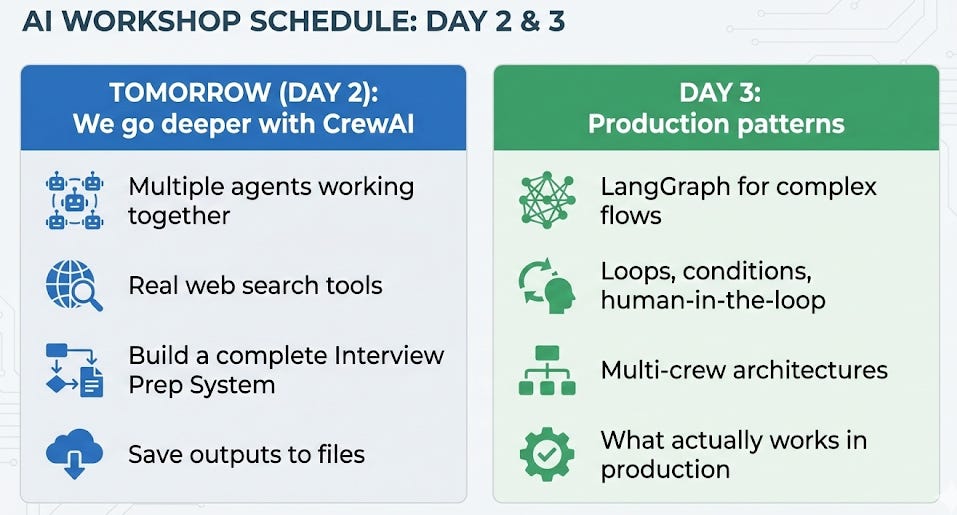
Day 2: Multi-agent systems with CrewAI + web search
Day 3: LangGraph production patterns (the stuff that gets you hired)
Bonus: Full GitHub repo + Google Colab notebooks
This is the content I wish existed when I was leveling up. Now it does.
🔗 All code is on GitHub: https://github.com/DoraSzasz/ai-agents-bootcamp?tab=readme-ov-file
Let’s go.
What Is an AI Agent (Really)?
Forget the buzzwords. Here’s the simple definition:
An AI agent is an AI that can take actions autonomously to accomplish a goal.
That’s it. But that “simple” definition contains a revolution:
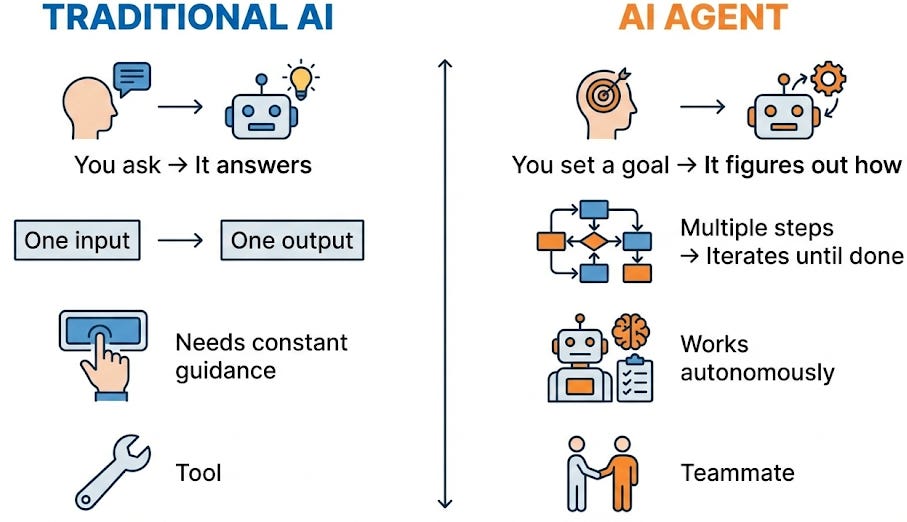
Think about it like this:
ChatGPT = A really smart assistant waiting for your next command
AI Agent = A junior analyst who takes your brief and comes back with the deliverable

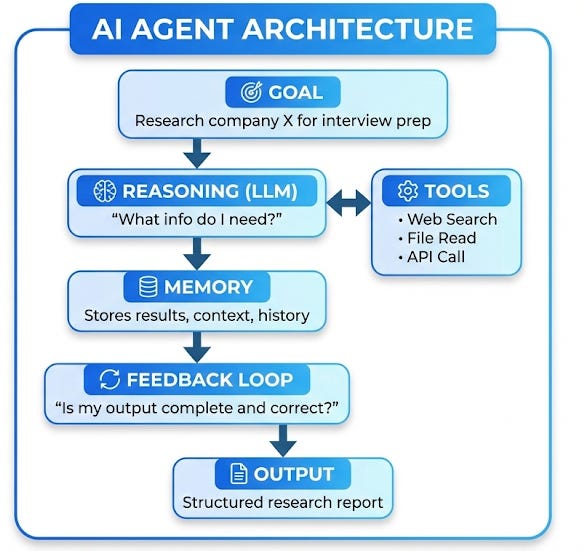
The 5 Building Blocks of Every AI Agent
Every agent - whether it’s automating your job search or running a $10M business process - has these five components:
1. Goal
What is the agent trying to accomplish?
python
# The goal is defined in the agent's configuration
goal = "Research a company and summarize key information for interview prep"
2. Reasoning
How does it decide what to do next?
This is where the LLM (GPT-4, Claude, etc.) lives. It’s the “brain” that interprets context and plans steps.
python
# The LLM provides reasoning capabilities
from langchain_openai import ChatOpenAI
llm = ChatOpenAI(model="gpt-4o", temperature=0.7)
3. Tools
What can it actually do?
python
# Tools give agents capabilities beyond text generation
tools = [
    WebSearchTool(),      # Search the internet
    FileReaderTool(),     # Read documents
    CodeExecutorTool(),   # Run code
    APICallerTool(),      # Call external services
]
This is crucial: An LLM without tools is just a text generator. An LLM WITH tools is an agent.
4. Memory
What does it remember?
python
# Memory stores context across interactions
memory = {
    "short_term": [],  # Current conversation
    "long_term": {},   # Persistent knowledge
}
5. Feedback Loop
How does it improve?
Agents observe the results of their actions and adjust. This is what makes them “agentic” vs. just running a script.
Let’s Build: Your First Agent in 15 Minutes
Enough theory. Let’s write code.
We’ll build a Company Research Agent that:
Takes a company name as input
Researches the company using an LLM
Returns a structured summary
Setup (2 minutes)
bash
# Clone the repo
git clone https://github.com/your-username/ai-agents-bootcamp.git
cd ai-agents-bootcamp

# Create virtual environment
python3 -m venv venv
source venv/bin/activate  # On Windows: venv\Scripts\activate

# Install dependencies
pip install -r requirements.txt

# Set up your API key
cp env.example .env
# Edit .env and add your OpenAI API key
# Change OPENAI_MODEL to another version if you would like
The Code: Simple Agent
Here’s the complete first agent: https://github.com/DoraSzasz/ai-agents-bootcamp/blob/main/src/01_first_agent.py
Run It
bash
python3 src/01_first_agent.pyWhat you will see:
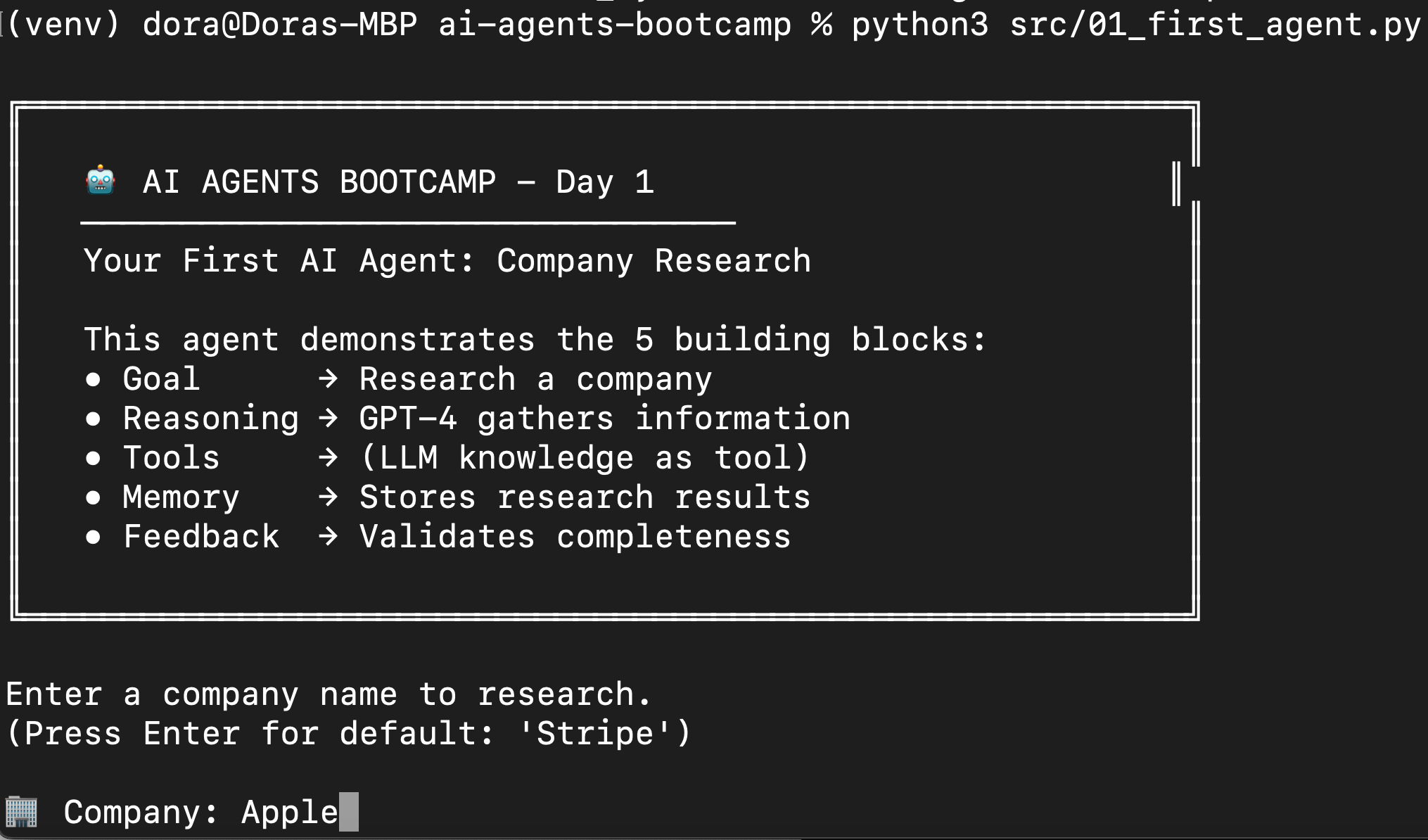
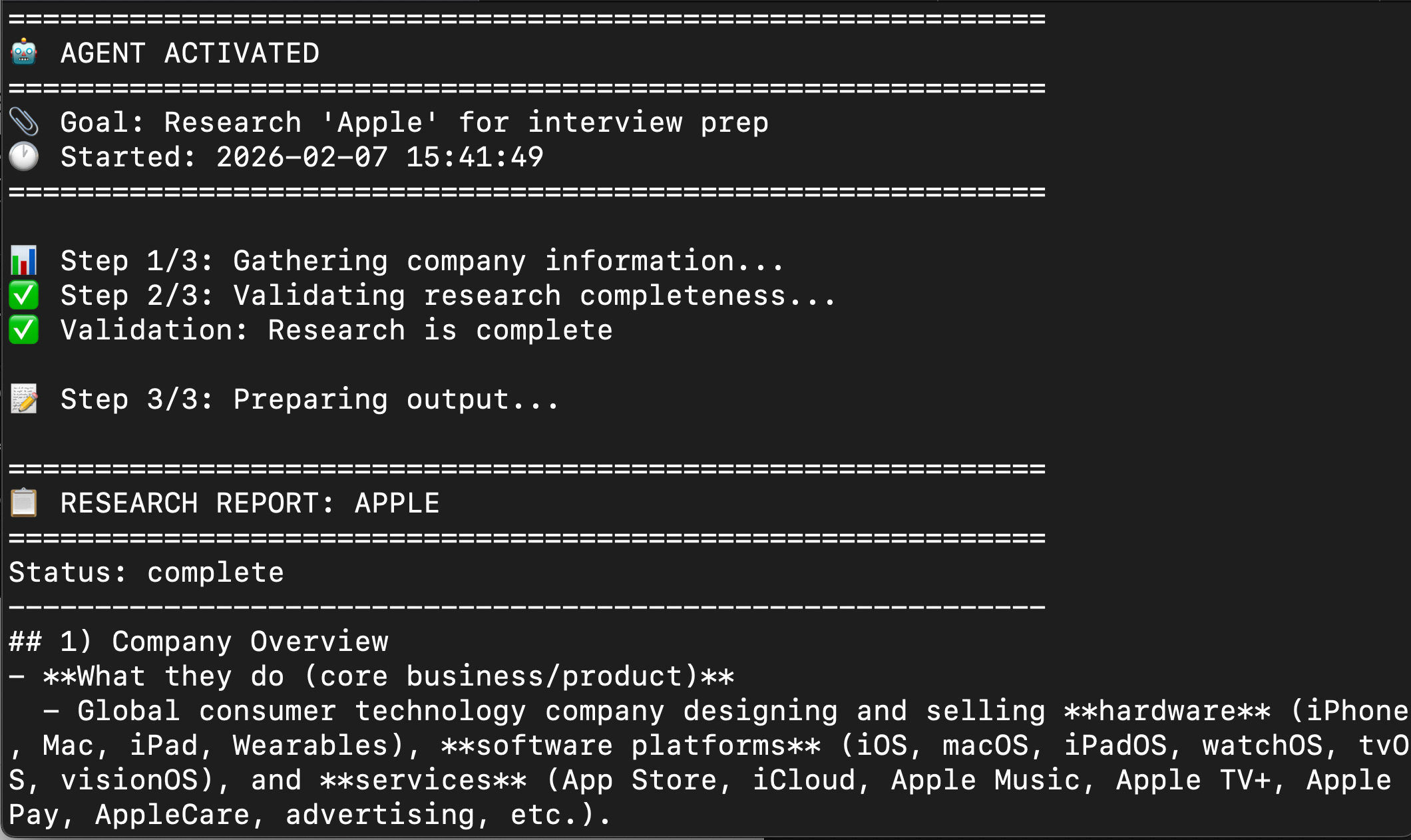
💾 Report saved to: outputs/apple_research_20260207_154222.md
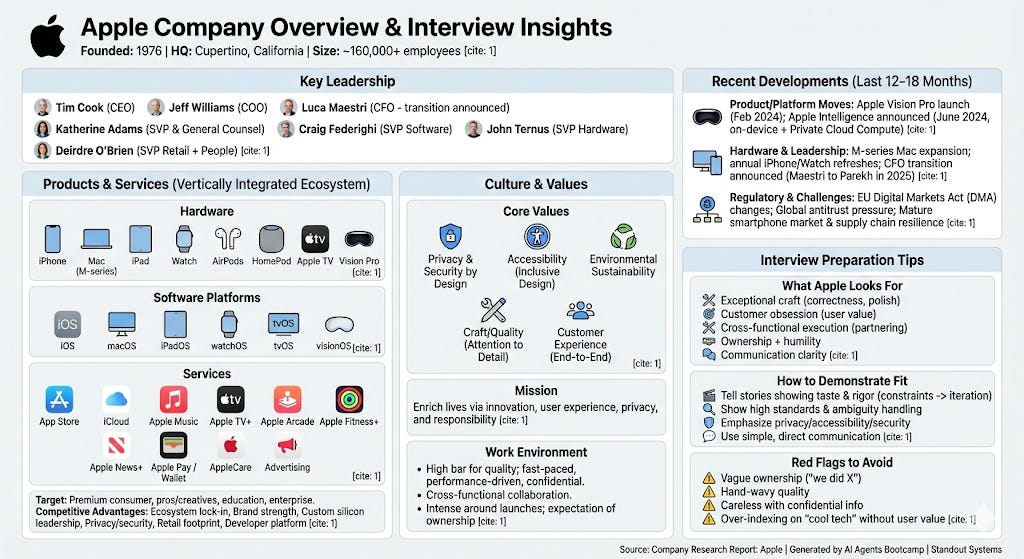
With complete overview of Apple’s overview, products and services, culture and values, recent developments (last 12-18 months), and interview preparation tips.
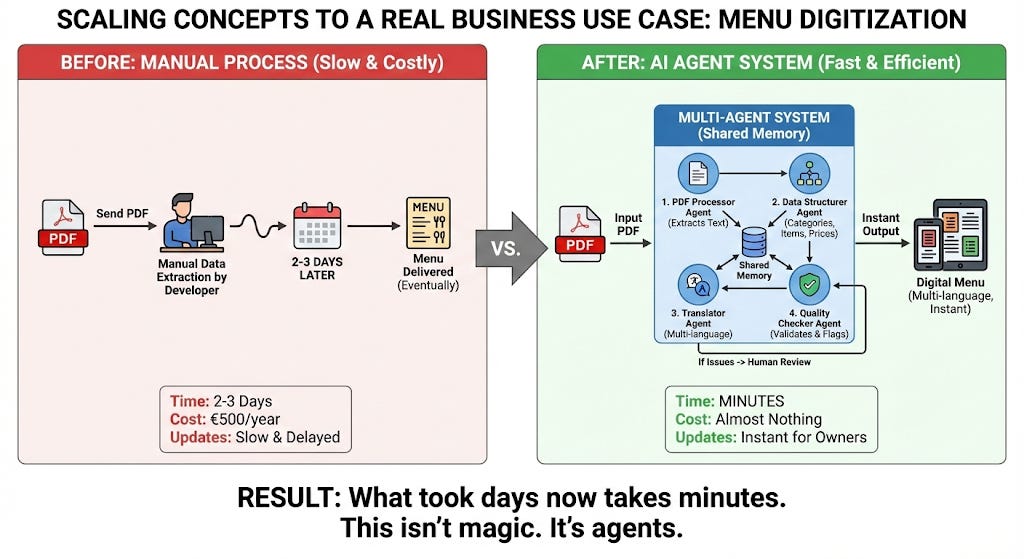
A Real-World Example: The 5-Minute Menu Digitizer
Let me show you how these concepts scale to a real business use case.
I know a startup that helps restaurants digitize their menus. Here is how they use agents to save restaurants time and money:
Why This Matters for YOUR Career
Here’s what I tell my coaching clients:
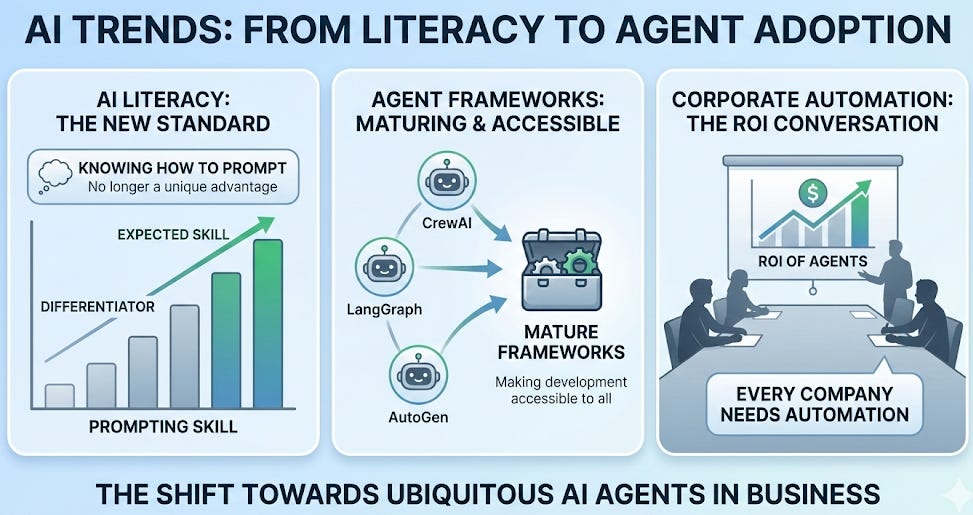
The AI/ML job market is shifting. Companies aren’t just hiring people who can use AI tools. They are hiring people who can build AI systems.
Three things are happening simultaneously:
If you can walk into an interview and say:
“I built an agent system that reduced our onboarding time from 3 days to 5 minutes”
...you’re not competing with people who can “use ChatGPT.” You’re in a different league.
The Architecture: How Agents Really Work
Here is the mental model that ties everything together:
Traditional AI workflow:
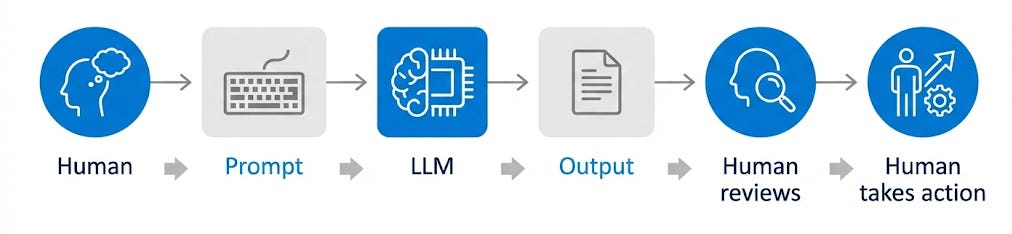
Agent workflow:
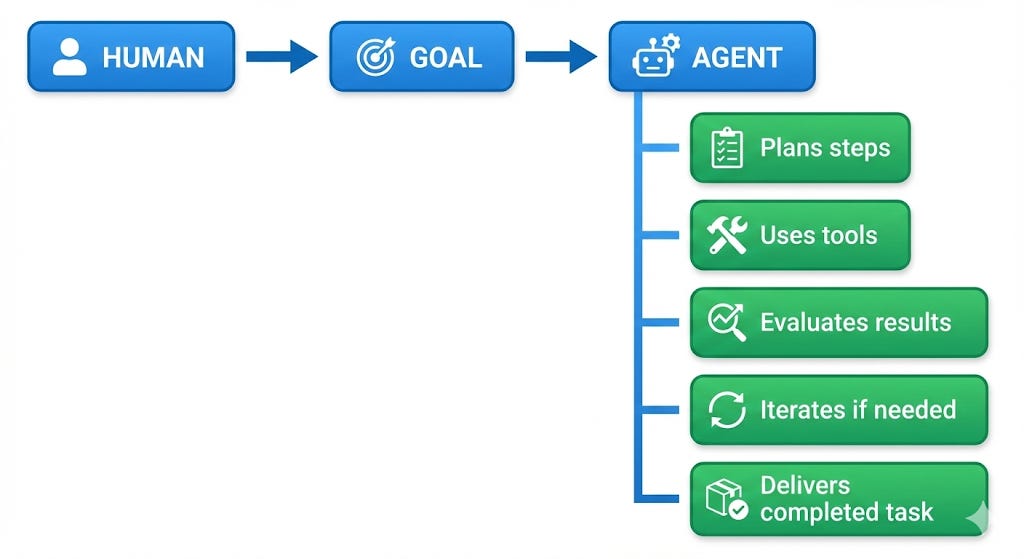
The human goes from operator to supervisor.
Bonus: Run in Google Colab (Zero Setup)
Don’t want to install anything locally? Use the Colab notebook:
Just add your API key and run!
What’s Coming in Days 2 and 3
Today’s Action Items
Action 1: Run the code
bash
git clone https://github.com/your-username/ai-agents-bootcamp.git
cd ai-agents-bootcamp
pip install -r requirements.txt
# Add your API key to .env
python src/01_first_agent.py
Action 2: Modify and experiment
Try changing:
The company being researched
The system prompt (what information to gather)
Add a new section to the research output
Action 3: Think about YOUR use case
What’s ONE task in your workflow that:
Takes more than 30 minutes
Follows a somewhat predictable pattern
Involves gathering information and producing an output
Write it down. That’s your first real agent candidate.
Tomorrow: We build multi-agent systems.
The Interview Prep Agent that researches companies, researches your interviewer, and generates tailored questions - automatically.
See you then.
- Teodora
This is Day 1 of the AI Agents series.
🔗 Code: https://github.com/DoraSzasz/ai-agents-bootcamp?tab=readme-ov-file
Subscribe so you don’t miss Days 2 and 3.
Built something? Reply to this email - I read every response.