
Algorithmic Heartbeat: How Nature-Inspired AI Is Revolutionizing Cardiac Health Monitoring
The intersection of evolutionary biology and machine learning is creating diagnostic systems that could save millions of lives—and open doors for AI/ML professionals who understand this convergence.

Your heart beats approximately 100,000 times a day. Hidden within each electrical pulse is a wealth of diagnostic information—patterns that can predict heart attacks, detect silent arrhythmias, and identify conditions that traditional methods miss entirely.
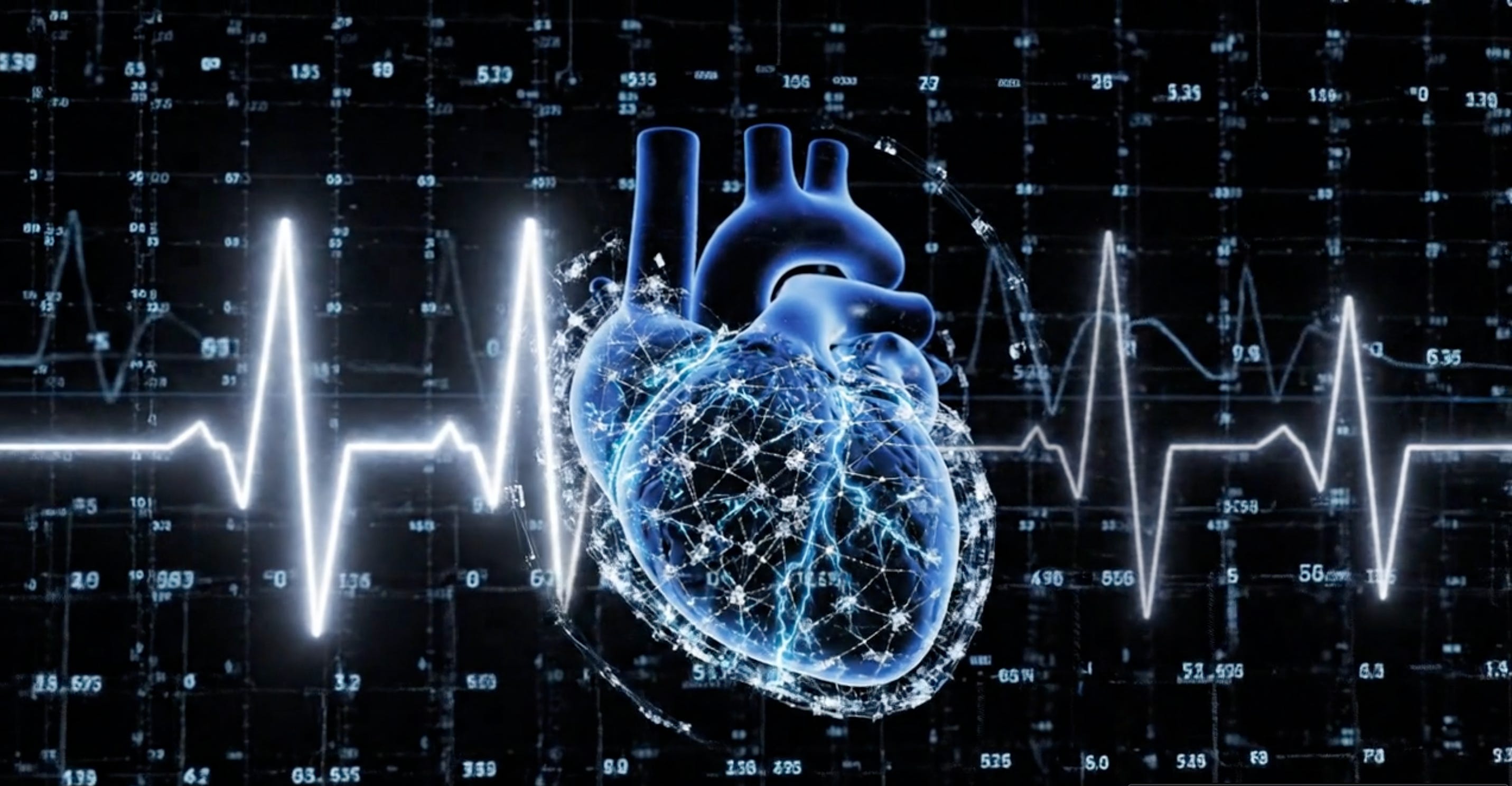
But here’s what fascinates me: the algorithms achieving breakthrough accuracy in cardiac diagnostics aren’t just neural networks or transformer models. They’re systems that learn the way nature learns—through evolution, swarm behavior, and immune responses.
Welcome to bio-inspired cardiac AI, one of the most promising intersections of machine learning and healthcare. And if you’re an AI/ML professional looking to differentiate yourself, understanding this space could be your competitive edge.
Why This Matters Now
Cardiovascular diseases remain the leading cause of death globally, responsible for approximately 17.9 million deaths annually—that’s 32% of all global fatalities. What’s more troubling: over 75% of these deaths occur in low and middle-income countries, where access to cardiologists is limited.
The promise of AI in this space isn’t just academic. In January 2025, research published in Nature Medicine demonstrated that AI-enabled ECG alert systems can significantly reduce mortality in real clinical settings. We’re past the proof-of-concept phase—we’re in deployment.
But here’s what sets the most successful systems apart: they don’t just throw deep learning at the problem. They leverage bio-inspired optimization to handle the unique challenges of cardiac data.
What Makes Cardiac Data So Challenging
If you’ve worked with healthcare AI, you know the standard challenges—class imbalance, noise, patient variability. Cardiac monitoring amplifies all of these:
Signal variability: ECG waveforms differ not just between patients but within the same patient, influenced by motion, electrode placement, and physiological states.
Real-time requirements: Unlike cancer detection where you have time to analyze images, cardiac anomalies like ventricular tachycardia require immediate detection to prevent sudden cardiac death.
Multi-dimensional complexity: A 12-lead ECG generates interconnected signals that must be analyzed both individually and collectively. Feature selection from this high-dimensional space is computationally expensive.
Interpretability demands: When a cardiologist asks “why did your model flag this patient?”, you need an answer. Black-box systems, no matter how accurate, face adoption barriers in clinical settings.
This is where bio-inspired algorithms shine.
The Core Bio-Inspired Approaches in Cardiac AI
1. Genetic Algorithms for Feature Selection
Think about ECG analysis. A typical dataset might include thousands of features extracted from signal morphology, heart rate variability, frequency domain analysis, and patient metadata. Not all features matter equally for predicting, say, atrial fibrillation versus a benign ectopic beat.
Genetic algorithms (GAs) approach this problem the way evolution approaches adaptation. They maintain a “population” of potential feature subsets, each represented as a chromosome. These solutions compete based on diagnostic accuracy:
Selection: Better-performing feature sets are more likely to reproduce
Crossover: Successful subsets exchange features, creating new combinations
Mutation: Random changes introduce diversity, preventing convergence to local optima
The result? GAs can identify optimal feature subsets from massive ECG datasets that would be computationally intractable for exhaustive search methods.
Practical application: A recent implementation achieved AUC improvements of 12% over random feature selection for arrhythmia classification, while reducing the feature set by 67%—making the model faster and more interpretable.
2. Particle Swarm Optimization for Model Tuning
Neural networks for ECG analysis require careful hyperparameter tuning: learning rates, layer depths, regularization strengths, window sizes for signal segmentation. Grid search is prohibitively expensive. Random search is better but still wasteful.
Particle Swarm Optimization (PSO) mimics how birds flock or fish school. Each “particle” represents a configuration of hyperparameters, moving through the solution space guided by:
Its own best-found position (cognitive component)
The swarm’s best-found position (social component)
The swarm converges toward optimal configurations while maintaining enough diversity to avoid local minima.

Why this matters for cardiac AI: PSO has been successfully used to tune LSTM networks for predicting future ECG readings, achieving convergence 3-5x faster than Bayesian optimization while finding comparable or better solutions.
3. Ant Colony Optimization for Diagnostic Pathways
In complex medical networks, finding the optimal “path” through data isn’t just metaphorical. Consider multi-modal cardiac assessment: you have ECG signals, echocardiogram images, patient history, lab values, and potentially genetic markers. How do you weight and sequence these inputs?
Ant Colony Optimization (ACO) treats this as a graph traversal problem. Virtual “ants” explore different diagnostic pathways, depositing “pheromone” on routes that lead to accurate diagnoses. Over iterations, stronger pheromone trails emerge on optimal paths, guiding subsequent exploration.

Recent breakthrough: Researchers have used ACO to optimize data classification pipelines for heart disease detection, achieving 4% accuracy improvements over standard ensemble methods while providing inherently interpretable decision paths.
4. Artificial Immune Systems for Anomaly Detection
Perhaps the most elegant bio-inspired approach for cardiac monitoring: systems modeled on how your immune system distinguishes “self” from “non-self.”
In cardiac monitoring, AIS algorithms learn what “normal” looks like for a specific patient, then flag deviations. This is particularly powerful for:
Detecting subtle changes in ECG patterns before they become clinically obvious
Adapting to individual patient baselines rather than population averages
Providing early warning for deteriorating conditions
The negative selection algorithms in AIS create “detectors” that respond to abnormal patterns while remaining tolerant to normal variations—exactly like T-cells in your immune system.
5. Spiking Neural Networks: The Next Frontier
The most recent development combines bio-inspiration at the algorithmic and architectural levels. Spiking Neural Networks (SNNs) don’t use continuous activation values—they communicate through discrete “spikes,” mimicking biological neurons.
Research published in November 2025 in Scientific Reports demonstrated that SNNs achieve comparable accuracy to traditional deep learning models for arrhythmia detection while requiring significantly less computational power—critical for edge deployment in wearable devices.
From Theory to Practice: A Real Implementation Pipeline
Let me walk you through how these approaches combine in a production cardiac monitoring system. (Want to run this yourself? I’ve included a complete Jupyter notebook with working code for each component. Copy the Google Colab File→Save a copy in Drive)
Stage 1: Signal Preprocessing Raw ECG signals are filtered and segmented. Modified Kalman filters (another bio-inspired approach) can achieve SNR improvements of 20+ dB, dramatically improving downstream classification.
Stage 2: Feature Extraction Both traditional features (R-peak detection, QRS complex analysis) and learned features (from CNN layers) are extracted. This creates a high-dimensional feature space.
Stage 3: Feature Selection via GA A genetic algorithm identifies the most predictive feature subset, reducing dimensionality while maintaining (or improving) classification accuracy.
Stage 4: Model Optimization via PSO Hyperparameters for the classification model—whether a CNN, LSTM, or hybrid—are optimized using particle swarm optimization.
Stage 5: Classification with Explainability The trained model classifies cardiac conditions. Increasingly, these systems include explainable AI components that highlight which ECG segments drove the classification.
Stage 6: Continuous Learning via AIS An artificial immune system layer monitors for drift, adapting to patient-specific baselines and flagging novel anomalies that don’t fit learned patterns.
What This Means for Your Career
If you’re building a career in healthcare AI, bio-inspired algorithms offer several strategic advantages:
Differentiation: Most candidates can talk about transformers and CNNs. Few can articulate how genetic algorithms optimize feature selection or how swarm intelligence improves hyperparameter tuning. This knowledge signals depth.
Practical problem-solving: Healthcare AI has unique constraints—interpretability requirements, regulatory scrutiny, limited labeled data. Bio-inspired approaches directly address these challenges.
Interview preparation: System design questions in healthcare ML interviews often involve optimization trade-offs. Being able to discuss PSO vs. Bayesian optimization, or GA-based feature selection, demonstrates sophisticated thinking.
Research opportunities: The intersection of bio-inspired computing and healthcare AI is active but not saturated. There’s room for meaningful contributions.
Getting Started: Resources and Next Steps
🔗 Hands-On Code: Download the companion Jupyter notebook
I’ve created a complete notebook with working Python implementations of everything covered in this article:
GeneticFeatureSelectorclass for ECG feature selectionParticleSwarmOptimizerfor neural network hyperparameter tuningArtificialImmuneSystemfor patient-specific anomaly detectionBioInspiredCardiacPipelinecombining all approaches end-to-end
The notebook runs with minimal dependencies (numpy, scikit-learn, matplotlib) and includes synthetic ECG data so you can experiment immediately. Swap in real datasets like MIT-BIH when you’re ready.
For staying current:
Follow journals like Scientific Reports, Computers in Biology and Medicine, and Expert Systems with Applications for latest research
The European Heart Rhythm Association (EHRA) and Heart Rhythm Society (HRS) published a joint scientific statement on AI in clinical electrophysiology in 2025—essential reading
The Bigger Picture
What draws me to bio-inspired cardiac AI isn’t just the technical elegance—it’s the symmetry. We’re using algorithms modeled on biological systems to understand the most fundamental biological rhythm in human life: the heartbeat.
Nature has spent millions of years optimizing for efficiency, robustness, and adaptation. By encoding these principles into our algorithms, we’re not just building better classifiers—we’re building systems that can handle the messy, variable, high-stakes reality of human health.
For AI/ML professionals, this represents both an opportunity and a responsibility. The systems we build can quite literally save lives. And understanding how to build them well—not just accurately, but robustly, interpretably, and equitably—is the challenge of our generation.
Your heart is beating right now as you read this. Somewhere, an algorithm is learning to listen.
Teodora is a Staff-level ML Scientist specializing in clinical imaging and cardiovascular AI. She has contributed to multiple FDA 510(k) clearances for AI-enabled cardiac features and scaled cardiovascular data pipelines processing 100K+ echocardiography studies. Follow her at teodora.coach for more on AI/ML career development.
P.S. If you found this valuable, I’d love to hear which bio-inspired approach you’re most interested in exploring. Reply to this email or drop a comment—your questions often shape future posts.