
Pixel-Perfect: The Standout Guide to Image Segmentation for Self-Driving Cars 🚗💨
This one is for the visual learners and the computer vision enthusiasts. We’re diving into one of the "sexiest" but most difficult problems in ML: Teaching a car to see.

Imagine you are driving through Times Square at noon. It’s a chaotic symphony of yellow taxis, tourists, flashing billboards, and delivery trucks. As a human, your brain instantly “segments” the world: That’s a drivable road, that’s a red light, and that’s a pedestrian about to jaywalk.
For a self-driving car, this isn’t just a “nice to have”—it’s a matter of life and death. The car needs to perform Semantic Image Segmentation: classifying every single pixel in an image into a category.
Here is how you design it like a Senior ML Engineer.
1. The Sensory Toolkit (The “Eyes” and “Ears”)
Before the model can think, the car must gather data. In an interview, mention Sensor Fusion. No single sensor is perfect:
Cameras: High-resolution, great for color (traffic lights!) and texture. Weakness: Low light and bad weather.
Radar: Uses radio waves to detect distance and speed. Strength: Works in fog/rain. Weakness: Low resolution.
Lidar: Uses lasers to create a precise 3D “point cloud.” Strength: Amazing for distance. Weakness: Super expensive and fails in heavy rain/fog.
Microphones: Yes, ears! To hear sirens or the sound of tires on a wet road (which tells the system to slow down).
2. The Task Hierarchy: From Boxes to Pixels
Don’t just jump to segmentation. Show the interviewer you understand the complexity levels:
Object Detection: Drawing a “bounding box” around a car. (Simple, but boxes overlap in traffic).
Semantic Segmentation: Coloring every “road” pixel blue and every “car” pixel red. (Great, but it can’t tell where Car A ends and Car B begins).
Instance Segmentation: The gold standard. It detects each individual object and segments it. (Essential for navigating tight spaces).
3. The Heavy Hitters: SOTA Model Architectures 🧠
This is where you show off your technical depth. When the interviewer asks “Which model?”, give them these three options:
A. FCN (Fully Convolutional Networks)
The “OG” of segmentation.
How it works: It replaces the “Fully Connected” layers at the end of a normal CNN with convolutional layers. It uses Upsampling to turn low-res features back into a full-sized image.
Pro Tip: Mention Skip Connections. They take “sharp” info from early layers and skip them forward to the end to make sure the edges of objects aren’t blurry.
B. U-Net
The “Encoder-Decoder” king.
The Shape: It looks like a “U.” The left side (Encoder) compresses the image to understand what is in it. The right side (Decoder) expands it to figure out where it is.
Why use it? It’s incredibly efficient and requires fewer training images than most deep networks.
C. Mask R-CNN
The “Best of Both Worlds.”
It combines Faster R-CNN (for bounding boxes) with an FCN (for pixel masks).
Key Detail: It uses a RoI Align (Region of Interest) layer to make sure the pixel-level masks align perfectly with the original image.
4. The “Small Data” Nightmare: Transfer Learning
You don’t have 10 million labeled driving images? No problem. Use Transfer Learning.
Take a model pre-trained on a massive dataset like ImageNet or COCO and then:
Case 1 (Tiny Data): Freeze the whole model and only retrain the final classification layer.
Case 2 (Medium Data): Fine-tune the top few layers (the ones that handle complex shapes).
Case 3 (Plenty of Data): Use the pre-trained weights as a starting point and retrain the whole network.
5. Fighting Edge Cases with GANs ⛈️
If your dataset is all “Sunny California” but your car needs to drive in “Snowy Montreal,” your model will fail.
The Solution: cGANs (Conditional Generative Adversarial Networks).
You can use cGANs for Image-to-Image Translation. You feed it a sunny road photo, and the GAN “translates” it into a snowy version. Boom—instant synthetic training data for dangerous weather conditions.
6. Measuring Success: Why “Accuracy” is a Trap
If you say “I’ll use Accuracy,” you might lose the job. Why? Class Imbalance.
In a driving photo, 80% of the pixels are “Sky” and “Road.” If your model predicts “Sky” perfectly but misses every “Pedestrian,” its accuracy will still be 80%—but the car will be dangerous!
The Standout Metric: IoU (Intersection over Union)
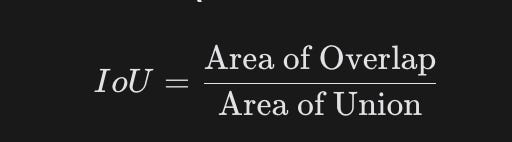
It measures how well your predicted mask “overlaps” with the ground truth.
Mean IoU (mIoU): Average the IoU for all classes (Road, Car, Pedestrian). If your mIoU is high, your model is truly “seeing.”
7. The Ultimate Online Metric: Manual Intervention
In the real world, the only metric that matters is: How many miles can the car drive before a human has to grab the wheel? This is called “Disengagement Rate.” If your new model reduces interventions, it’s ready for the road.
🎓 Interview Summary Checklist:
Sensors: Propose Camera + Radar + Lidar fusion.
Architecture: Suggest Mask R-CNN for precision or U-Net for efficiency.
Data: Use Transfer Learning to save time and cGANs to create weather diversity.
Metric: Always use mIoU for offline and Manual Intervention for online.
Drive safe, and go crush that interview!
Teodora @ Standout Systems
Thanks for this, Neural Foundry — really appreciate you taking the time to leave such a detailed read.
Totally with you on IoU vs “95% accuracy”: segmentation is basically a class-imbalance booby trap, and “overall accuracy” can look amazing while the model quietly faceplants on the tiny-but-life-or-death classes (pedestrians/cyclists). Per-class IoU (and recall on those rare classes) tells the truth.
Also love that you called out the cGAN / synthetic weather angle — the long tail is where models go to get humbled, and generating credible edge conditions is one of the few practical ways to stress-test before reality does it for you.
And YES to your sensor-fusion nuance: it’s not just redundancy, it’s complementarity across physics + clocks. Cameras give dense semantics but come with latency; radar’s Doppler velocity is insanely valuable in real time. “Good fusion” is often more about time alignment + uncertainty modeling + ego-motion compensation than it is about just stacking features.
If you’re open to sharing: in your experience, what fusion approach held up best in practice — classic tracking + late fusion, or learned BEV-style fusion? Might be a perfect follow-up mini-post. 🚗⚡️